
Supervisory Board approves Future Plan 2030: A strong signal for Volkswagen Group
-
After intense and constructive discussions, the Supervisory Board has unanimously approved the comprehensive Future Plan 2030 for the Volkswagen Group.
-
With the Supervisory Board’s approval, the transformation accelerates as the Executive Board will now decisively implement the Future Plan 2030, collaborating with the brands, subsidiaries and employee representatives.
-
The Volkswagen Group is deliberately investing in new products, technologies and tomorrow’s growth areas, based on competitive costs, significantly more efficient structures and – as a result – a sustainable improvement in profitability.
-
CEO Oliver Blume: “The Supervisory Board has unanimously approved the Executive Board’s Future Plan presented today. This is a strong sign for the future of the Volkswagen Group. We are taking responsibility for our entire team, for our partners and for industrial jobs worldwide. Over the coming years, we will invest a three-figure billion sum to make our iconic brands even more attractive, stronger and more competitive.”
Today, the Supervisory Board of the Volkswagen Group unanimously approved the Executive Board’s Future Plan 2030. As the automotive industry and its markets undergo their fastest and most fundamental shift to date, it enables the Volkswagen Group to pave the way for sustainable long-term success. The Future Plan 2030 sets the stage to make the Volkswagen Group and its brands stronger, more competitive and better positioned for the future. The Executive Board will now jointly drive the necessary measures, collaborating with the brands, subsidiaries and employee representatives.
Today, the Supervisory Board of the Volkswagen Group unanimously approved the Executive Board’s Future Plan 2030. As the automotive industry and its markets undergo their fastest and most fundamental shift to date, it enables the Volkswagen Group to pave the way for sustainable long-term success. The Future Plan 2030 sets the stage to make the Volkswagen Group and its brands stronger, more competitive and better positioned for the future. The Executive Board will now jointly drive the necessary measures, collaborating with the brands, subsidiaries and employee representatives.
Oliver Blume, CEO of Volkswagen Group: “The Supervisory Board has unanimously approved the Executive Board’s Future Plan presented today. This is a strong signal for the future of the Volkswagen Group. We are taking responsibility for our entire workforce, for our partners and for industrial jobs worldwide. Over the coming years, we will invest a three-figure billion sum to make our iconic brands even more attractive, stronger and more competitive.»
Hans Dieter Pötsch, Chairman of the Supervisory Board: “With the Future Plan now approved, the Supervisory Board and Executive Board of Volkswagen AG have shown that the company’s transformation is being driven forward with full force. The Supervisory Board received a thorough briefing on the transformation concept developed by the Executive Board. As the Supervisory Board, we are convinced that implementation of the Future Plan will secure the long-term viability and competitiveness of the Volkswagen Group.”
Olaf Lies, Minister-President of Lower Saxony: “Given international competition, the challenges
facing Volkswagen and the German automotive industry are enormous. It is all the more important
that we now take a shared path toward the necessary transformation. Today’s resolution sends
important signs: We are investing heavily in future viability and are improving competitiveness. At
the same time, we will develop long-term prospects for our sites. And politics also has to play a
supporting role: We need a competitive framework and a trade policy that strengthens our industrial
base in an increasingly fierce global competition.”
Christiane Benner, Deputy Chair of the Supervisory Board and First Chairwoman of IG Metall: “In
this crisis situation, we fought hard for good solutions. With the Future Plan now adopted, we are
facing the enormous challenges together with the Executive Board and shareholders. It is good that
the Executive Board now has the foundation to tackle the major tasks ahead. This explicitly includes
developing future scenarios for all plants. As Germany’s largest industrial company, Volkswagen
continues to bear an enormous responsibility toward its employees and the regions it operates in.
We will demonstrate that the best results are achieved when all parties face even the hardest
challenges head-on and together.”
Daniela Cavallo, Chairwoman of the Group and Central Works Council of the Volkswagen Group:
“The Future Plan is a necessity to lead our Group successfully into the next decade – without placing
the burden of that transformation solely on employees. In doing so, Volkswagen once again affirms
that job security and economic viability carry equal weight as shared corporate goals. They are not
in opposition; they are intertwined. In this spirit, co-determination within the Group is stepping up
to its responsibilities in this situation as well. This provides the basis for the company to continue
driving success with attractive models and, in doing so, to help secure a future for employees at
every site.
The most extensive transformation program in the Volkswagen Group’s history
The Future Plan 2030 is the most strategically profound transformation program in the Volkswagen
Group’s history. Its 12 initiatives are designed to make the Group and its brands more resilient and
competitive under demanding market conditions:
- Strengthening the financial basis: The core automotive business takes center stage. As
market conditions evolve, the Volkswagen Group plans for annual sales of nine million
vehicles. The primary financial target is an operating margin of nine percent by 2030. This
corresponds to an operating result of approximately €31 billion, with €37 billion in overhead
costs and a target of €135 billion for capital expenditure and research and development in
the planning period 2027 to 2031. Based on the Future Plan, the individual items of capital
expenditure as well as research and development costs will be presented to the Supervisory
Board in a validated and detailed form as part of the usual process in the course of Planning
Round 75. - Focusing on the most compelling vehicles: By 2035, the Volkswagen Group will streamline
its model portfolio by around 50 percent and reduce its offering complexity by around 75
percent. The prioritized models aim to excel in design and technology – and benefit from
the focus on fewer variants: Higher volumes per model, lower costs, stronger economies of
scale. The Volkswagen Group is systematically tailoring its platforms, electronic
Page 3 of 5
architectures, driver assistance systems and software to the needs of both the Western and
Eastern hemispheres. - Taking efficiency to the next level: A group-wide Operational Excellence program pools the
capabilities of research and development, procurement, production, quality, sales and
overhead. The program targets significantly higher efficiency, smoother processes, greater
speed and a measurable boost in competitiveness. - Strengthening leadership, accelerating decisions: Leaner leadership structures, clear
accountability and shorter lines of decision making empower teams to act faster and take
greater ownership. A unified performance and bonus system for executives will drive
accountability for individual results and collective performance. - Establishing a competitive production structure: Consistent with the agreed target vision,
a concept for a sustainable and competitive production structure is to be developed for the
European plants by the end of June 2027. With its resolution, the Supervisory Board
acknowledges that Volkswagen Group’s European capacity currently exceeds demand by
more than 500,000 units and that a competitive future production allocation for the Emden,
Zwickau, Hanover and Neckarsulm plants cannot currently be secured on a staggered basis
from 2031 to 2034. In parallel and in addition, alternative uses for these plants are being
assessed. - Adjusting the workforce structure: Beyond existing programs, a further fundamental
adjustment of the global workforce capacity is necessary to achieve the objectives of the
transformation program and safeguard the competitiveness of the Volkswagen Group.
Given intensifying global competition, shifting demand and technological change in the
automotive industry, a consistent alignment of workforce capacity with economic reality is
essential. According to the analysis underlying the Future Plan 2030, a Group-wide
workforce adjustment of approximately 50,000 positions – including management roles –
will be necessary. - Further developing the North America and China businesses: In North America, the
Volkswagen Group will focus on the most profitable segments. In China, the Group is
adapting to revised expectations for overall growth in the Chinese automotive market and
is expanding its export business toward the “Global South.” - Simplifying the Group structure: The Supervisory Board has asked the Executive Board to
develop a model for an evolved decision-making and group structure for the Volkswagen
Group. This evolved structure will provide the basis for realizing technological and other
synergies that reduce costs across the Group. It will enable clear assignment of
accountability and faster, more efficient, modern group governance. The Supervisory Board
of Volkswagen AG will resolve to limit its reserved approval rights to measures of material
significance for the Group as a whole, with thresholds adjusted accordingly to align with
standard DAX practice. - Streamlining the investment portfolio, deploying capital more effectively: The portfolioof shareholdings and businesses will be rigorously assessed to retain only those with a clearstrategic and financial contribution to the core business – it is to be streamlined by around one-third. Non-strategic activities will be divested or realigned. The real estate portfolio will also be reviewed. The goal is to have a leaner structure and more effective use of capital.
Accelerating implementation
With today‘s resolution, the Future Plan 2030 moves into further implementation. Measures already
under way will be pursued consistently; the further steps will be initiated immediately. Where
agreements with employee representatives are required, the responsible bodies of the brands and
subsidiaries will be involved and discussions will begin promptly. The Executive Board takes overall
responsibility for implementation and will drive the program forward with clear governance and the
necessary pace. The Supervisory Board will be closely involved in the process, regularly updated on
progress and consulted where necessary.
Oliver Blume, CEO of Volkswagen Group: “The Supervisory Board has unanimously approved the Executive Board’s Future Plan presented today. This is a strong signal for the future of the Volkswagen Group. We are taking responsibility for our entire workforce, for our partners and for industrial jobs worldwide. Over the coming years, we will invest a three-figure billion sum to make our iconic brands even more attractive, stronger and more competitive.»
Hans Dieter Pötsch, Chairman of the Supervisory Board: “With the Future Plan now approved, the Supervisory Board and Executive Board of Volkswagen AG have shown that the company’s transformation is being driven forward with full force. The Supervisory Board received a thorough briefing on the transformation concept developed by the Executive Board. As the Supervisory Board, we are convinced that implementation of the Future Plan will secure the long-term viability and competitiveness of the Volkswagen Group.”
Today, the Supervisory Board of the Volkswagen Group unanimously approved the Executive Board’s Future Plan 2030. As the automotive industry and its markets undergo their fastest and most fundamental shift to date, it enables the Volkswagen Group to pave the way for sustainable long-term success. The Future Plan 2030 sets the stage to make the Volkswagen Group and its brands stronger, more competitive and better positioned for the future. The Executive Board will now jointly drive the necessary measures, collaborating with the brands, subsidiaries and employee representatives.
Oliver Blume, CEO of Volkswagen Group: “The Supervisory Board has unanimously approved the Executive Board’s Future Plan presented today. This is a strong signal for the future of the Volkswagen Group. We are taking responsibility for our entire workforce, for our partners and for industrial jobs worldwide. Over the coming years, we will invest a three-figure billion sum to make our iconic brands even more attractive, stronger and more competitive.»
Hans Dieter Pötsch, Chairman of the Supervisory Board: “With the Future Plan now approved, the Supervisory Board and Executive Board of Volkswagen AG have shown that the company’s transformation is being driven forward with full force. The Supervisory Board received a thorough briefing on the transformation concept developed by the Executive Board. As the Supervisory Board, we are convinced that implementation of the Future Plan will secure the long-term viability and competitiveness of the Volkswagen Group.”
Olaf Lies, Minister-President of Lower Saxony: “Given international competition, the challenges
facing Volkswagen and the German automotive industry are enormous. It is all the more important
that we now take a shared path toward the necessary transformation. Today’s resolution sends
important signs: We are investing heavily in future viability and are improving competitiveness. At
the same time, we will develop long-term prospects for our sites. And politics also has to play a
supporting role: We need a competitive framework and a trade policy that strengthens our industrial
base in an increasingly fierce global competition.”
Christiane Benner, Deputy Chair of the Supervisory Board and First Chairwoman of IG Metall: “In
this crisis situation, we fought hard for good solutions. With the Future Plan now adopted, we are
facing the enormous challenges together with the Executive Board and shareholders. It is good that
the Executive Board now has the foundation to tackle the major tasks ahead. This explicitly includes
developing future scenarios for all plants. As Germany’s largest industrial company, Volkswagen
continues to bear an enormous responsibility toward its employees and the regions it operates in.
We will demonstrate that the best results are achieved when all parties face even the hardest
challenges head-on and together.”
Daniela Cavallo, Chairwoman of the Group and Central Works Council of the Volkswagen Group:
“The Future Plan is a necessity to lead our Group successfully into the next decade – without placing
the burden of that transformation solely on employees. In doing so, Volkswagen once again affirms
that job security and economic viability carry equal weight as shared corporate goals. They are not
in opposition; they are intertwined. In this spirit, co-determination within the Group is stepping up
to its responsibilities in this situation as well. This provides the basis for the company to continue
driving success with attractive models and, in doing so, to help secure a future for employees at
every site.
The most extensive transformation program in the Volkswagen Group’s history
The Future Plan 2030 is the most strategically profound transformation program in the Volkswagen
Group’s history. Its 12 initiatives are designed to make the Group and its brands more resilient and
competitive under demanding market conditions:
- Strengthening the financial basis: The core automotive business takes center stage. As
market conditions evolve, the Volkswagen Group plans for annual sales of nine million
vehicles. The primary financial target is an operating margin of nine percent by 2030. This
corresponds to an operating result of approximately €31 billion, with €37 billion in overhead
costs and a target of €135 billion for capital expenditure and research and development in
the planning period 2027 to 2031. Based on the Future Plan, the individual items of capital
expenditure as well as research and development costs will be presented to the Supervisory
Board in a validated and detailed form as part of the usual process in the course of Planning
Round 75. - Focusing on the most compelling vehicles: By 2035, the Volkswagen Group will streamline
its model portfolio by around 50 percent and reduce its offering complexity by around 75
percent. The prioritized models aim to excel in design and technology – and benefit from
the focus on fewer variants: Higher volumes per model, lower costs, stronger economies of
scale. The Volkswagen Group is systematically tailoring its platforms, electronic
Page 3 of 5
architectures, driver assistance systems and software to the needs of both the Western and
Eastern hemispheres. - Taking efficiency to the next level: A group-wide Operational Excellence program pools the
capabilities of research and development, procurement, production, quality, sales and
overhead. The program targets significantly higher efficiency, smoother processes, greater
speed and a measurable boost in competitiveness. - Strengthening leadership, accelerating decisions: Leaner leadership structures, clear
accountability and shorter lines of decision making empower teams to act faster and take
greater ownership. A unified performance and bonus system for executives will drive
accountability for individual results and collective performance. - Establishing a competitive production structure: Consistent with the agreed target vision,
a concept for a sustainable and competitive production structure is to be developed for the
European plants by the end of June 2027. With its resolution, the Supervisory Board
acknowledges that Volkswagen Group’s European capacity currently exceeds demand by
more than 500,000 units and that a competitive future production allocation for the Emden,
Zwickau, Hanover and Neckarsulm plants cannot currently be secured on a staggered basis
from 2031 to 2034. In parallel and in addition, alternative uses for these plants are being
assessed. - Adjusting the workforce structure: Beyond existing programs, a further fundamental
adjustment of the global workforce capacity is necessary to achieve the objectives of the
transformation program and safeguard the competitiveness of the Volkswagen Group.
Given intensifying global competition, shifting demand and technological change in the
automotive industry, a consistent alignment of workforce capacity with economic reality is
essential. According to the analysis underlying the Future Plan 2030, a Group-wide
workforce adjustment of approximately 50,000 positions – including management roles –
will be necessary. - Further developing the North America and China businesses: In North America, the
Volkswagen Group will focus on the most profitable segments. In China, the Group is
adapting to revised expectations for overall growth in the Chinese automotive market and
is expanding its export business toward the “Global South.” - Simplifying the Group structure: The Supervisory Board has asked the Executive Board to
develop a model for an evolved decision-making and group structure for the Volkswagen
Group. This evolved structure will provide the basis for realizing technological and other
synergies that reduce costs across the Group. It will enable clear assignment of
accountability and faster, more efficient, modern group governance. The Supervisory Board
of Volkswagen AG will resolve to limit its reserved approval rights to measures of material
significance for the Group as a whole, with thresholds adjusted accordingly to align with
standard DAX practice. - Streamlining the investment portfolio, deploying capital more effectively: The portfolioof shareholdings and businesses will be rigorously assessed to retain only those with a clearstrategic and financial contribution to the core business – it is to be streamlined by around one-third. Non-strategic activities will be divested or realigned. The real estate portfolio will also be reviewed. The goal is to have a leaner structure and more effective use of capital.
Accelerating implementation
With today‘s resolution, the Future Plan 2030 moves into further implementation. Measures already
under way will be pursued consistently; the further steps will be initiated immediately. Where
agreements with employee representatives are required, the responsible bodies of the brands and
subsidiaries will be involved and discussions will begin promptly. The Executive Board takes overall
responsibility for implementation and will drive the program forward with clear governance and the
necessary pace. The Supervisory Board will be closely involved in the process, regularly updated on
progress and consulted where necessary.
Olaf Lies, Minister-President of Lower Saxony: “Given international competition, the challenges
facing Volkswagen and the German automotive industry are enormous. It is all the more important
that we now take a shared path toward the necessary transformation. Today’s resolution sends
important signs: We are investing heavily in future viability and are improving competitiveness. At
the same time, we will develop long-term prospects for our sites. And politics also has to play a
supporting role: We need a competitive framework and a trade policy that strengthens our industrial
base in an increasingly fierce global competition.”
Christiane Benner, Deputy Chair of the Supervisory Board and First Chairwoman of IG Metall: “In
this crisis situation, we fought hard for good solutions. With the Future Plan now adopted, we are
facing the enormous challenges together with the Executive Board and shareholders. It is good that
the Executive Board now has the foundation to tackle the major tasks ahead. This explicitly includes
developing future scenarios for all plants. As Germany’s largest industrial company, Volkswagen
continues to bear an enormous responsibility toward its employees and the regions it operates in.
We will demonstrate that the best results are achieved when all parties face even the hardest
challenges head-on and together.”
Daniela Cavallo, Chairwoman of the Group and Central Works Council of the Volkswagen Group:
“The Future Plan is a necessity to lead our Group successfully into the next decade – without placing
the burden of that transformation solely on employees. In doing so, Volkswagen once again affirms
that job security and economic viability carry equal weight as shared corporate goals. They are not
in opposition; they are intertwined. In this spirit, co-determination within the Group is stepping up
to its responsibilities in this situation as well. This provides the basis for the company to continue
driving success with attractive models and, in doing so, to help secure a future for employees at
every site.
Today, the Supervisory Board of the Volkswagen Group unanimously approved the Executive Board’s Future Plan 2030. As the automotive industry and its markets undergo their fastest and most fundamental shift to date, it enables the Volkswagen Group to pave the way for sustainable long-term success. The Future Plan 2030 sets the stage to make the Volkswagen Group and its brands stronger, more competitive and better positioned for the future. The Executive Board will now jointly drive the necessary measures, collaborating with the brands, subsidiaries and employee representatives.
Oliver Blume, CEO of Volkswagen Group: “The Supervisory Board has unanimously approved the Executive Board’s Future Plan presented today. This is a strong signal for the future of the Volkswagen Group. We are taking responsibility for our entire workforce, for our partners and for industrial jobs worldwide. Over the coming years, we will invest a three-figure billion sum to make our iconic brands even more attractive, stronger and more competitive.»
Hans Dieter Pötsch, Chairman of the Supervisory Board: “With the Future Plan now approved, the Supervisory Board and Executive Board of Volkswagen AG have shown that the company’s transformation is being driven forward with full force. The Supervisory Board received a thorough briefing on the transformation concept developed by the Executive Board. As the Supervisory Board, we are convinced that implementation of the Future Plan will secure the long-term viability and competitiveness of the Volkswagen Group.”
Olaf Lies, Minister-President of Lower Saxony: “Given international competition, the challenges
facing Volkswagen and the German automotive industry are enormous. It is all the more important
that we now take a shared path toward the necessary transformation. Today’s resolution sends
important signs: We are investing heavily in future viability and are improving competitiveness. At
the same time, we will develop long-term prospects for our sites. And politics also has to play a
supporting role: We need a competitive framework and a trade policy that strengthens our industrial
base in an increasingly fierce global competition.”
Christiane Benner, Deputy Chair of the Supervisory Board and First Chairwoman of IG Metall: “In
this crisis situation, we fought hard for good solutions. With the Future Plan now adopted, we are
facing the enormous challenges together with the Executive Board and shareholders. It is good that
the Executive Board now has the foundation to tackle the major tasks ahead. This explicitly includes
developing future scenarios for all plants. As Germany’s largest industrial company, Volkswagen
continues to bear an enormous responsibility toward its employees and the regions it operates in.
We will demonstrate that the best results are achieved when all parties face even the hardest
challenges head-on and together.”
Daniela Cavallo, Chairwoman of the Group and Central Works Council of the Volkswagen Group:
“The Future Plan is a necessity to lead our Group successfully into the next decade – without placing
the burden of that transformation solely on employees. In doing so, Volkswagen once again affirms
that job security and economic viability carry equal weight as shared corporate goals. They are not
in opposition; they are intertwined. In this spirit, co-determination within the Group is stepping up
to its responsibilities in this situation as well. This provides the basis for the company to continue
driving success with attractive models and, in doing so, to help secure a future for employees at
every site.
The most extensive transformation program in the Volkswagen Group’s history
The Future Plan 2030 is the most strategically profound transformation program in the Volkswagen
Group’s history. Its 12 initiatives are designed to make the Group and its brands more resilient and
competitive under demanding market conditions:
- Strengthening the financial basis: The core automotive business takes center stage. As
market conditions evolve, the Volkswagen Group plans for annual sales of nine million
vehicles. The primary financial target is an operating margin of nine percent by 2030. This
corresponds to an operating result of approximately €31 billion, with €37 billion in overhead
costs and a target of €135 billion for capital expenditure and research and development in
the planning period 2027 to 2031. Based on the Future Plan, the individual items of capital
expenditure as well as research and development costs will be presented to the Supervisory
Board in a validated and detailed form as part of the usual process in the course of Planning
Round 75. - Focusing on the most compelling vehicles: By 2035, the Volkswagen Group will streamline
its model portfolio by around 50 percent and reduce its offering complexity by around 75
percent. The prioritized models aim to excel in design and technology – and benefit from
the focus on fewer variants: Higher volumes per model, lower costs, stronger economies of
scale. The Volkswagen Group is systematically tailoring its platforms, electronic
Page 3 of 5
architectures, driver assistance systems and software to the needs of both the Western and
Eastern hemispheres. - Taking efficiency to the next level: A group-wide Operational Excellence program pools the
capabilities of research and development, procurement, production, quality, sales and
overhead. The program targets significantly higher efficiency, smoother processes, greater
speed and a measurable boost in competitiveness. - Strengthening leadership, accelerating decisions: Leaner leadership structures, clear
accountability and shorter lines of decision making empower teams to act faster and take
greater ownership. A unified performance and bonus system for executives will drive
accountability for individual results and collective performance. - Establishing a competitive production structure: Consistent with the agreed target vision,
a concept for a sustainable and competitive production structure is to be developed for the
European plants by the end of June 2027. With its resolution, the Supervisory Board
acknowledges that Volkswagen Group’s European capacity currently exceeds demand by
more than 500,000 units and that a competitive future production allocation for the Emden,
Zwickau, Hanover and Neckarsulm plants cannot currently be secured on a staggered basis
from 2031 to 2034. In parallel and in addition, alternative uses for these plants are being
assessed. - Adjusting the workforce structure: Beyond existing programs, a further fundamental
adjustment of the global workforce capacity is necessary to achieve the objectives of the
transformation program and safeguard the competitiveness of the Volkswagen Group.
Given intensifying global competition, shifting demand and technological change in the
automotive industry, a consistent alignment of workforce capacity with economic reality is
essential. According to the analysis underlying the Future Plan 2030, a Group-wide
workforce adjustment of approximately 50,000 positions – including management roles –
will be necessary. - Further developing the North America and China businesses: In North America, the
Volkswagen Group will focus on the most profitable segments. In China, the Group is
adapting to revised expectations for overall growth in the Chinese automotive market and
is expanding its export business toward the “Global South.” - Simplifying the Group structure: The Supervisory Board has asked the Executive Board to
develop a model for an evolved decision-making and group structure for the Volkswagen
Group. This evolved structure will provide the basis for realizing technological and other
synergies that reduce costs across the Group. It will enable clear assignment of
accountability and faster, more efficient, modern group governance. The Supervisory Board
of Volkswagen AG will resolve to limit its reserved approval rights to measures of material
significance for the Group as a whole, with thresholds adjusted accordingly to align with
standard DAX practice. - Streamlining the investment portfolio, deploying capital more effectively: The portfolioof shareholdings and businesses will be rigorously assessed to retain only those with a clearstrategic and financial contribution to the core business – it is to be streamlined by around one-third. Non-strategic activities will be divested or realigned. The real estate portfolio will also be reviewed. The goal is to have a leaner structure and more effective use of capital.
Accelerating implementation
With today‘s resolution, the Future Plan 2030 moves into further implementation. Measures already
under way will be pursued consistently; the further steps will be initiated immediately. Where
agreements with employee representatives are required, the responsible bodies of the brands and
subsidiaries will be involved and discussions will begin promptly. The Executive Board takes overall
responsibility for implementation and will drive the program forward with clear governance and the
necessary pace. The Supervisory Board will be closely involved in the process, regularly updated on
progress and consulted where necessary.
The most extensive transformation program in the Volkswagen Group’s history
The Future Plan 2030 is the most strategically profound transformation program in the Volkswagen
Group’s history. Its 12 initiatives are designed to make the Group and its brands more resilient and
competitive under demanding market conditions:
Today, the Supervisory Board of the Volkswagen Group unanimously approved the Executive Board’s Future Plan 2030. As the automotive industry and its markets undergo their fastest and most fundamental shift to date, it enables the Volkswagen Group to pave the way for sustainable long-term success. The Future Plan 2030 sets the stage to make the Volkswagen Group and its brands stronger, more competitive and better positioned for the future. The Executive Board will now jointly drive the necessary measures, collaborating with the brands, subsidiaries and employee representatives.
Oliver Blume, CEO of Volkswagen Group: “The Supervisory Board has unanimously approved the Executive Board’s Future Plan presented today. This is a strong signal for the future of the Volkswagen Group. We are taking responsibility for our entire workforce, for our partners and for industrial jobs worldwide. Over the coming years, we will invest a three-figure billion sum to make our iconic brands even more attractive, stronger and more competitive.»
Hans Dieter Pötsch, Chairman of the Supervisory Board: “With the Future Plan now approved, the Supervisory Board and Executive Board of Volkswagen AG have shown that the company’s transformation is being driven forward with full force. The Supervisory Board received a thorough briefing on the transformation concept developed by the Executive Board. As the Supervisory Board, we are convinced that implementation of the Future Plan will secure the long-term viability and competitiveness of the Volkswagen Group.”
Olaf Lies, Minister-President of Lower Saxony: “Given international competition, the challenges
facing Volkswagen and the German automotive industry are enormous. It is all the more important
that we now take a shared path toward the necessary transformation. Today’s resolution sends
important signs: We are investing heavily in future viability and are improving competitiveness. At
the same time, we will develop long-term prospects for our sites. And politics also has to play a
supporting role: We need a competitive framework and a trade policy that strengthens our industrial
base in an increasingly fierce global competition.”
Christiane Benner, Deputy Chair of the Supervisory Board and First Chairwoman of IG Metall: “In
this crisis situation, we fought hard for good solutions. With the Future Plan now adopted, we are
facing the enormous challenges together with the Executive Board and shareholders. It is good that
the Executive Board now has the foundation to tackle the major tasks ahead. This explicitly includes
developing future scenarios for all plants. As Germany’s largest industrial company, Volkswagen
continues to bear an enormous responsibility toward its employees and the regions it operates in.
We will demonstrate that the best results are achieved when all parties face even the hardest
challenges head-on and together.”
Daniela Cavallo, Chairwoman of the Group and Central Works Council of the Volkswagen Group:
“The Future Plan is a necessity to lead our Group successfully into the next decade – without placing
the burden of that transformation solely on employees. In doing so, Volkswagen once again affirms
that job security and economic viability carry equal weight as shared corporate goals. They are not
in opposition; they are intertwined. In this spirit, co-determination within the Group is stepping up
to its responsibilities in this situation as well. This provides the basis for the company to continue
driving success with attractive models and, in doing so, to help secure a future for employees at
every site.
The most extensive transformation program in the Volkswagen Group’s history
The Future Plan 2030 is the most strategically profound transformation program in the Volkswagen
Group’s history. Its 12 initiatives are designed to make the Group and its brands more resilient and
competitive under demanding market conditions:
- Strengthening the financial basis: The core automotive business takes center stage. As
market conditions evolve, the Volkswagen Group plans for annual sales of nine million
vehicles. The primary financial target is an operating margin of nine percent by 2030. This
corresponds to an operating result of approximately €31 billion, with €37 billion in overhead
costs and a target of €135 billion for capital expenditure and research and development in
the planning period 2027 to 2031. Based on the Future Plan, the individual items of capital
expenditure as well as research and development costs will be presented to the Supervisory
Board in a validated and detailed form as part of the usual process in the course of Planning
Round 75. - Focusing on the most compelling vehicles: By 2035, the Volkswagen Group will streamline
its model portfolio by around 50 percent and reduce its offering complexity by around 75
percent. The prioritized models aim to excel in design and technology – and benefit from
the focus on fewer variants: Higher volumes per model, lower costs, stronger economies of
scale. The Volkswagen Group is systematically tailoring its platforms, electronic
Page 3 of 5
architectures, driver assistance systems and software to the needs of both the Western and
Eastern hemispheres. - Taking efficiency to the next level: A group-wide Operational Excellence program pools the
capabilities of research and development, procurement, production, quality, sales and
overhead. The program targets significantly higher efficiency, smoother processes, greater
speed and a measurable boost in competitiveness. - Strengthening leadership, accelerating decisions: Leaner leadership structures, clear
accountability and shorter lines of decision making empower teams to act faster and take
greater ownership. A unified performance and bonus system for executives will drive
accountability for individual results and collective performance. - Establishing a competitive production structure: Consistent with the agreed target vision,
a concept for a sustainable and competitive production structure is to be developed for the
European plants by the end of June 2027. With its resolution, the Supervisory Board
acknowledges that Volkswagen Group’s European capacity currently exceeds demand by
more than 500,000 units and that a competitive future production allocation for the Emden,
Zwickau, Hanover and Neckarsulm plants cannot currently be secured on a staggered basis
from 2031 to 2034. In parallel and in addition, alternative uses for these plants are being
assessed. - Adjusting the workforce structure: Beyond existing programs, a further fundamental
adjustment of the global workforce capacity is necessary to achieve the objectives of the
transformation program and safeguard the competitiveness of the Volkswagen Group.
Given intensifying global competition, shifting demand and technological change in the
automotive industry, a consistent alignment of workforce capacity with economic reality is
essential. According to the analysis underlying the Future Plan 2030, a Group-wide
workforce adjustment of approximately 50,000 positions – including management roles –
will be necessary. - Further developing the North America and China businesses: In North America, the
Volkswagen Group will focus on the most profitable segments. In China, the Group is
adapting to revised expectations for overall growth in the Chinese automotive market and
is expanding its export business toward the “Global South.” - Simplifying the Group structure: The Supervisory Board has asked the Executive Board to
develop a model for an evolved decision-making and group structure for the Volkswagen
Group. This evolved structure will provide the basis for realizing technological and other
synergies that reduce costs across the Group. It will enable clear assignment of
accountability and faster, more efficient, modern group governance. The Supervisory Board
of Volkswagen AG will resolve to limit its reserved approval rights to measures of material
significance for the Group as a whole, with thresholds adjusted accordingly to align with
standard DAX practice. - Streamlining the investment portfolio, deploying capital more effectively: The portfolioof shareholdings and businesses will be rigorously assessed to retain only those with a clearstrategic and financial contribution to the core business – it is to be streamlined by around one-third. Non-strategic activities will be divested or realigned. The real estate portfolio will also be reviewed. The goal is to have a leaner structure and more effective use of capital.
Accelerating implementation
With today‘s resolution, the Future Plan 2030 moves into further implementation. Measures already
under way will be pursued consistently; the further steps will be initiated immediately. Where
agreements with employee representatives are required, the responsible bodies of the brands and
subsidiaries will be involved and discussions will begin promptly. The Executive Board takes overall
responsibility for implementation and will drive the program forward with clear governance and the
necessary pace. The Supervisory Board will be closely involved in the process, regularly updated on
progress and consulted where necessary.
Today, the Supervisory Board of the Volkswagen Group unanimously approved the Executive Board’s Future Plan 2030. As the automotive industry and its markets undergo their fastest and most fundamental shift to date, it enables the Volkswagen Group to pave the way for sustainable long-term success. The Future Plan 2030 sets the stage to make the Volkswagen Group and its brands stronger, more competitive and better positioned for the future. The Executive Board will now jointly drive the necessary measures, collaborating with the brands, subsidiaries and employee representatives.
Oliver Blume, CEO of Volkswagen Group: “The Supervisory Board has unanimously approved the Executive Board’s Future Plan presented today. This is a strong signal for the future of the Volkswagen Group. We are taking responsibility for our entire workforce, for our partners and for industrial jobs worldwide. Over the coming years, we will invest a three-figure billion sum to make our iconic brands even more attractive, stronger and more competitive.»
Hans Dieter Pötsch, Chairman of the Supervisory Board: “With the Future Plan now approved, the Supervisory Board and Executive Board of Volkswagen AG have shown that the company’s transformation is being driven forward with full force. The Supervisory Board received a thorough briefing on the transformation concept developed by the Executive Board. As the Supervisory Board, we are convinced that implementation of the Future Plan will secure the long-term viability and competitiveness of the Volkswagen Group.”
Olaf Lies, Minister-President of Lower Saxony: “Given international competition, the challenges
facing Volkswagen and the German automotive industry are enormous. It is all the more important
that we now take a shared path toward the necessary transformation. Today’s resolution sends
important signs: We are investing heavily in future viability and are improving competitiveness. At
the same time, we will develop long-term prospects for our sites. And politics also has to play a
supporting role: We need a competitive framework and a trade policy that strengthens our industrial
base in an increasingly fierce global competition.”
Christiane Benner, Deputy Chair of the Supervisory Board and First Chairwoman of IG Metall: “In
this crisis situation, we fought hard for good solutions. With the Future Plan now adopted, we are
facing the enormous challenges together with the Executive Board and shareholders. It is good that
the Executive Board now has the foundation to tackle the major tasks ahead. This explicitly includes
developing future scenarios for all plants. As Germany’s largest industrial company, Volkswagen
continues to bear an enormous responsibility toward its employees and the regions it operates in.
We will demonstrate that the best results are achieved when all parties face even the hardest
challenges head-on and together.”
Daniela Cavallo, Chairwoman of the Group and Central Works Council of the Volkswagen Group:
“The Future Plan is a necessity to lead our Group successfully into the next decade – without placing
the burden of that transformation solely on employees. In doing so, Volkswagen once again affirms
that job security and economic viability carry equal weight as shared corporate goals. They are not
in opposition; they are intertwined. In this spirit, co-determination within the Group is stepping up
to its responsibilities in this situation as well. This provides the basis for the company to continue
driving success with attractive models and, in doing so, to help secure a future for employees at
every site.
The most extensive transformation program in the Volkswagen Group’s history
The Future Plan 2030 is the most strategically profound transformation program in the Volkswagen
Group’s history. Its 12 initiatives are designed to make the Group and its brands more resilient and
competitive under demanding market conditions:
- Strengthening the financial basis: The core automotive business takes center stage. As
market conditions evolve, the Volkswagen Group plans for annual sales of nine million
vehicles. The primary financial target is an operating margin of nine percent by 2030. This
corresponds to an operating result of approximately €31 billion, with €37 billion in overhead
costs and a target of €135 billion for capital expenditure and research and development in
the planning period 2027 to 2031. Based on the Future Plan, the individual items of capital
expenditure as well as research and development costs will be presented to the Supervisory
Board in a validated and detailed form as part of the usual process in the course of Planning
Round 75. - Focusing on the most compelling vehicles: By 2035, the Volkswagen Group will streamline
its model portfolio by around 50 percent and reduce its offering complexity by around 75
percent. The prioritized models aim to excel in design and technology – and benefit from
the focus on fewer variants: Higher volumes per model, lower costs, stronger economies of
scale. The Volkswagen Group is systematically tailoring its platforms, electronic
Page 3 of 5
architectures, driver assistance systems and software to the needs of both the Western and
Eastern hemispheres. - Taking efficiency to the next level: A group-wide Operational Excellence program pools the
capabilities of research and development, procurement, production, quality, sales and
overhead. The program targets significantly higher efficiency, smoother processes, greater
speed and a measurable boost in competitiveness. - Strengthening leadership, accelerating decisions: Leaner leadership structures, clear
accountability and shorter lines of decision making empower teams to act faster and take
greater ownership. A unified performance and bonus system for executives will drive
accountability for individual results and collective performance. - Establishing a competitive production structure: Consistent with the agreed target vision,
a concept for a sustainable and competitive production structure is to be developed for the
European plants by the end of June 2027. With its resolution, the Supervisory Board
acknowledges that Volkswagen Group’s European capacity currently exceeds demand by
more than 500,000 units and that a competitive future production allocation for the Emden,
Zwickau, Hanover and Neckarsulm plants cannot currently be secured on a staggered basis
from 2031 to 2034. In parallel and in addition, alternative uses for these plants are being
assessed. - Adjusting the workforce structure: Beyond existing programs, a further fundamental
adjustment of the global workforce capacity is necessary to achieve the objectives of the
transformation program and safeguard the competitiveness of the Volkswagen Group.
Given intensifying global competition, shifting demand and technological change in the
automotive industry, a consistent alignment of workforce capacity with economic reality is
essential. According to the analysis underlying the Future Plan 2030, a Group-wide
workforce adjustment of approximately 50,000 positions – including management roles –
will be necessary. - Further developing the North America and China businesses: In North America, the
Volkswagen Group will focus on the most profitable segments. In China, the Group is
adapting to revised expectations for overall growth in the Chinese automotive market and
is expanding its export business toward the “Global South.” - Simplifying the Group structure: The Supervisory Board has asked the Executive Board to
develop a model for an evolved decision-making and group structure for the Volkswagen
Group. This evolved structure will provide the basis for realizing technological and other
synergies that reduce costs across the Group. It will enable clear assignment of
accountability and faster, more efficient, modern group governance. The Supervisory Board
of Volkswagen AG will resolve to limit its reserved approval rights to measures of material
significance for the Group as a whole, with thresholds adjusted accordingly to align with
standard DAX practice. - Streamlining the investment portfolio, deploying capital more effectively: The portfolioof shareholdings and businesses will be rigorously assessed to retain only those with a clearstrategic and financial contribution to the core business – it is to be streamlined by around one-third. Non-strategic activities will be divested or realigned. The real estate portfolio will also be reviewed. The goal is to have a leaner structure and more effective use of capital.
Accelerating implementation
With today‘s resolution, the Future Plan 2030 moves into further implementation. Measures already
under way will be pursued consistently; the further steps will be initiated immediately. Where
agreements with employee representatives are required, the responsible bodies of the brands and
subsidiaries will be involved and discussions will begin promptly. The Executive Board takes overall
responsibility for implementation and will drive the program forward with clear governance and the
necessary pace. The Supervisory Board will be closely involved in the process, regularly updated on
progress and consulted where necessary.
Today, the Supervisory Board of the Volkswagen Group unanimously approved the Executive Board’s Future Plan 2030. As the automotive industry and its markets undergo their fastest and most fundamental shift to date, it enables the Volkswagen Group to pave the way for sustainable long-term success. The Future Plan 2030 sets the stage to make the Volkswagen Group and its brands stronger, more competitive and better positioned for the future. The Executive Board will now jointly drive the necessary measures, collaborating with the brands, subsidiaries and employee representatives.
Oliver Blume, CEO of Volkswagen Group: “The Supervisory Board has unanimously approved the Executive Board’s Future Plan presented today. This is a strong signal for the future of the Volkswagen Group. We are taking responsibility for our entire workforce, for our partners and for industrial jobs worldwide. Over the coming years, we will invest a three-figure billion sum to make our iconic brands even more attractive, stronger and more competitive.»
Hans Dieter Pötsch, Chairman of the Supervisory Board: “With the Future Plan now approved, the Supervisory Board and Executive Board of Volkswagen AG have shown that the company’s transformation is being driven forward with full force. The Supervisory Board received a thorough briefing on the transformation concept developed by the Executive Board. As the Supervisory Board, we are convinced that implementation of the Future Plan will secure the long-term viability and competitiveness of the Volkswagen Group.”
Olaf Lies, Minister-President of Lower Saxony: “Given international competition, the challenges
facing Volkswagen and the German automotive industry are enormous. It is all the more important
that we now take a shared path toward the necessary transformation. Today’s resolution sends
important signs: We are investing heavily in future viability and are improving competitiveness. At
the same time, we will develop long-term prospects for our sites. And politics also has to play a
supporting role: We need a competitive framework and a trade policy that strengthens our industrial
base in an increasingly fierce global competition.”
Christiane Benner, Deputy Chair of the Supervisory Board and First Chairwoman of IG Metall: “In
this crisis situation, we fought hard for good solutions. With the Future Plan now adopted, we are
facing the enormous challenges together with the Executive Board and shareholders. It is good that
the Executive Board now has the foundation to tackle the major tasks ahead. This explicitly includes
developing future scenarios for all plants. As Germany’s largest industrial company, Volkswagen
continues to bear an enormous responsibility toward its employees and the regions it operates in.
We will demonstrate that the best results are achieved when all parties face even the hardest
challenges head-on and together.”
Daniela Cavallo, Chairwoman of the Group and Central Works Council of the Volkswagen Group:
“The Future Plan is a necessity to lead our Group successfully into the next decade – without placing
the burden of that transformation solely on employees. In doing so, Volkswagen once again affirms
that job security and economic viability carry equal weight as shared corporate goals. They are not
in opposition; they are intertwined. In this spirit, co-determination within the Group is stepping up
to its responsibilities in this situation as well. This provides the basis for the company to continue
driving success with attractive models and, in doing so, to help secure a future for employees at
every site.
The most extensive transformation program in the Volkswagen Group’s history
The Future Plan 2030 is the most strategically profound transformation program in the Volkswagen
Group’s history. Its 12 initiatives are designed to make the Group and its brands more resilient and
competitive under demanding market conditions:
- Strengthening the financial basis: The core automotive business takes center stage. As
market conditions evolve, the Volkswagen Group plans for annual sales of nine million
vehicles. The primary financial target is an operating margin of nine percent by 2030. This
corresponds to an operating result of approximately €31 billion, with €37 billion in overhead
costs and a target of €135 billion for capital expenditure and research and development in
the planning period 2027 to 2031. Based on the Future Plan, the individual items of capital
expenditure as well as research and development costs will be presented to the Supervisory
Board in a validated and detailed form as part of the usual process in the course of Planning
Round 75. - Focusing on the most compelling vehicles: By 2035, the Volkswagen Group will streamline
its model portfolio by around 50 percent and reduce its offering complexity by around 75
percent. The prioritized models aim to excel in design and technology – and benefit from
the focus on fewer variants: Higher volumes per model, lower costs, stronger economies of
scale. The Volkswagen Group is systematically tailoring its platforms, electronic
Page 3 of 5
architectures, driver assistance systems and software to the needs of both the Western and
Eastern hemispheres. - Taking efficiency to the next level: A group-wide Operational Excellence program pools the
capabilities of research and development, procurement, production, quality, sales and
overhead. The program targets significantly higher efficiency, smoother processes, greater
speed and a measurable boost in competitiveness. - Strengthening leadership, accelerating decisions: Leaner leadership structures, clear
accountability and shorter lines of decision making empower teams to act faster and take
greater ownership. A unified performance and bonus system for executives will drive
accountability for individual results and collective performance. - Establishing a competitive production structure: Consistent with the agreed target vision,
a concept for a sustainable and competitive production structure is to be developed for the
European plants by the end of June 2027. With its resolution, the Supervisory Board
acknowledges that Volkswagen Group’s European capacity currently exceeds demand by
more than 500,000 units and that a competitive future production allocation for the Emden,
Zwickau, Hanover and Neckarsulm plants cannot currently be secured on a staggered basis
from 2031 to 2034. In parallel and in addition, alternative uses for these plants are being
assessed. - Adjusting the workforce structure: Beyond existing programs, a further fundamental
adjustment of the global workforce capacity is necessary to achieve the objectives of the
transformation program and safeguard the competitiveness of the Volkswagen Group.
Given intensifying global competition, shifting demand and technological change in the
automotive industry, a consistent alignment of workforce capacity with economic reality is
essential. According to the analysis underlying the Future Plan 2030, a Group-wide
workforce adjustment of approximately 50,000 positions – including management roles –
will be necessary. - Further developing the North America and China businesses: In North America, the
Volkswagen Group will focus on the most profitable segments. In China, the Group is
adapting to revised expectations for overall growth in the Chinese automotive market and
is expanding its export business toward the “Global South.” - Simplifying the Group structure: The Supervisory Board has asked the Executive Board to
develop a model for an evolved decision-making and group structure for the Volkswagen
Group. This evolved structure will provide the basis for realizing technological and other
synergies that reduce costs across the Group. It will enable clear assignment of
accountability and faster, more efficient, modern group governance. The Supervisory Board
of Volkswagen AG will resolve to limit its reserved approval rights to measures of material
significance for the Group as a whole, with thresholds adjusted accordingly to align with
standard DAX practice. - Streamlining the investment portfolio, deploying capital more effectively: The portfolioof shareholdings and businesses will be rigorously assessed to retain only those with a clearstrategic and financial contribution to the core business – it is to be streamlined by around one-third. Non-strategic activities will be divested or realigned. The real estate portfolio will also be reviewed. The goal is to have a leaner structure and more effective use of capital.
Accelerating implementation
With today‘s resolution, the Future Plan 2030 moves into further implementation. Measures already
under way will be pursued consistently; the further steps will be initiated immediately. Where
agreements with employee representatives are required, the responsible bodies of the brands and
subsidiaries will be involved and discussions will begin promptly. The Executive Board takes overall
responsibility for implementation and will drive the program forward with clear governance and the
necessary pace. The Supervisory Board will be closely involved in the process, regularly updated on
progress and consulted where necessary.
Accelerating implementation
With today‘s resolution, the Future Plan 2030 moves into further implementation. Measures already
under way will be pursued consistently; the further steps will be initiated immediately. Where
agreements with employee representatives are required, the responsible bodies of the brands and
subsidiaries will be involved and discussions will begin promptly. The Executive Board takes overall
responsibility for implementation and will drive the program forward with clear governance and the
necessary pace. The Supervisory Board will be closely involved in the process, regularly updated on
progress and consulted where necessary.
Notas de prensa relacionadas
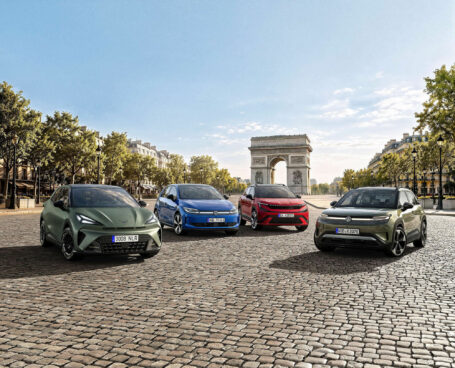
Volkswagen Group Design: sinergias en todo el Grupo con marcas distintivas
La Electric Urban Car Family demuestra cómo Volkswagen Group Design combina sinergias con identidades de marca claramente diferenciadas.Volkswagen Group Design define una dirección, unos métodos y unos estándares de calidad comunes, y refuerza al mismo
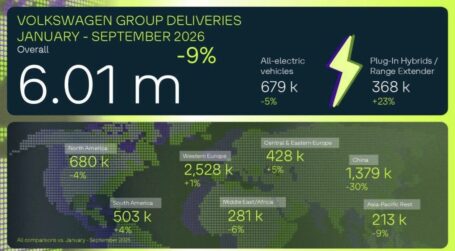
El Grupo Volkswagen entrega 6 millones de vehículos hasta septiembre – Alrededor del 40% de la cartera de pedidos en Europa corresponde a modelos 100% eléctricos
«En un entorno de mercado persistentemente difícil, el Grupo Volkswagen mantuvo estables, en conjunto, sus entregas fuera de China en los nueve primeros meses. Registramos crecimiento en Sudamérica y Europa. En nuestro mercado doméstico estamos viendo una tendencia notablemente acelerada hacia los vehículos 100% eléctricos. Los principales motivos son los elevados precios actuales de los […]
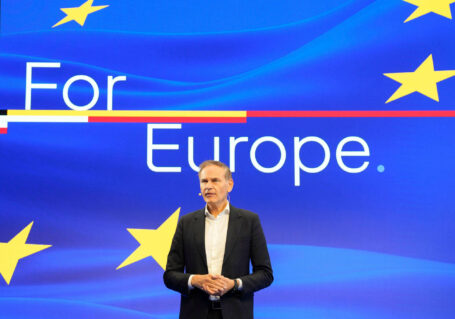
For Europe: el Grupo Volkswagen muestra cómo las fortalezas de Europa pueden convertirse en una agenda de futuro
En el evento «For Europe», celebrado la víspera del Salón del Automóvil de París, el Grupo Volkswagen combina transformación industrial, soberanía tecnológica y productos atractivos en una agenda europea de futuro clara, en estrecha cooperación